Welcome to our Water Treatment Company!
We'are Open: Mon - Sat 10:00 AM - 06:00 PM

- Call Us for help!
- +91-9911981992
- Mail Us
- sales@innovacorporate.com
Manufacturers, Exporters and Suppliers of ETP Cationic Poly Electrolyte – Sludge Dewatering & Flocculation Chemical for Effluent Treatment Plants in Daman
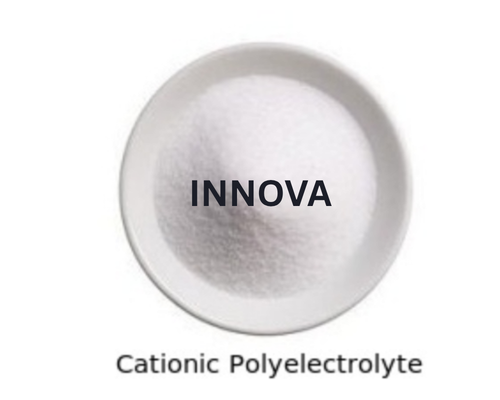
ETP Cationic Poly Electrolyte in Daman
Innova Corporate (India) supplies ETP Cationic Poly Electrolyte – a high molecular weight (8-15 million Da), medium to high charge density (20-50 mole%) cationic polyacrylamide for sludge dewatering and clarification in Daman's effluent treatment plants (ETPs), common effluent treatment plants (CETPs), and sewage treatment plants (STPs). This polymer is highly effective for organic and mixed industrial sludges from textile mills (dye sludge), chemical plants (solvent sludge), plastic manufacturing (oily sludge), seafood processing (proteinaceous sludge), and municipal sewage. For Daman's textile CETPs (which produce high volumes of biological sludge mixed with chemical sludge from dye precipitation), our CPAM achieves sludge cake solids of 20-25% using a centrifuge or belt press, significantly reducing sludge disposal costs. For chemical plants and plastic units, it dewaters oily and chemical sludge. For seafood processing ETPs, it dewaters protein-rich sludge. The product is supplied as a white granular powder (100% active) with charge density of 30-40% (customizable). It should be made down to 0.1-0.5% solution in clean, soft water. For continuous dewatering equipment (belt filter press, centrifuge), we provide automatic polymer make-down units. Dosage: 2-10 kg per ton of dry solids. For Daman's CETP handling a mix of textile, chemical, and domestic waste, we recommend jar test series to determine optimal polymer type. Available in 25kg bags with inner moisture-barrier liner. For large users (CETPs treating >10 MLD), we supply 500kg super sacks. We provide on-site trial support and polymer selection guidance (CST testing). For sludge thickening (gravity belt thickener), use lower MW CPAM. Also available as emulsion cationic polyelectrolytes (30-50% active).
Due to its adherence and reinforcing properties, Cationic Polyelectrolyte is widely used in the paper-making industry across Daman to enhance the staying rate of filling material, speed up size filterability, and white water sediment processing, ultimately increasing paper strength. Furthermore, PAM can be used with polyvinyl alcohol as a textile size to improve textile processing and enhance product properties for manufacturers in the Daman region.